Minnesota

From Evidence to Statewide Action: Strengthening Student Basic Needs in Minnesota

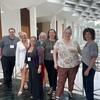
A photo of the Minnesota team at a 2025 gathering

Minnesota Project Team Members from The Hope Center; University of Minnesota; Minnesota Office of Higher Ed; Minnesota Department of Children, Youth, and Families

The Hope Center has worked alongside Minnesota leaders to better understand what students need, evaluate promising approaches, and help build a more coordinated statewide response to basic needs insecurity.

Nearly 40% of Minnesota undergraduates experience difficulty accessing or affording essentials such as food, stable housing, transportation, child care, and physical or mental healthcare. These challenges can jeopardize students’ ability to learn, persist, and complete a degree or credential.

Minnesota has responded by bringing together colleges and universities, state agencies, students, advocates, and community organizations to strengthen support—and move from isolated interventions toward a more connected basic-needs infrastructure.

Helping Shape a Statewide Framework

In 2023, the Minnesota Office of Higher Education convened a legislatively mandated Student Basic Needs Working Group comprising students, campus and system leaders, state agencies, advocates, and community partners. Minnesota-based Hope Center Practitioner-Researcher David Thompson participated in the group, helping to adapt national research and practitioner expertise to the local context.

The resulting 2024 Student Basic Needs Annual Report offered 32 recommendations spanning eight interconnected areas:

  • Statewide basic-needs infrastructure
  • Financial security
  • Food security
  • Housing
  • Child care
  • Transportation
  • Physical healthcare
  • Mental healthcare

Among its recommendations, the working group called for consistent statewide measurement of student needs; dedicated basic-needs capacity within the Office of Higher Education; stronger connections to public benefits; a Minnesota-specific campus toolkit; statewide benefits navigators; and continued investment in comprehensive campus supports.

Together, these recommendations offer Minnesota a shared framework for moving from individual programs toward sustained, coordinated action across institutions, systems, agencies, and communities.

Beyond Minnesota, the Student Basic Needs Working Group’s efforts have also helped lay the foundation for other states by informing our Every State, Every Student guide, which outlines key considerations and decision points in successfully advancing statewide basic needs efforts.

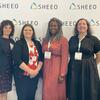
Dr Sara Abelson at SHEEO conference

Members of Minnesota Project Team and partners at SHEEO Conference

Building Evidence with the Minnesota State Colleges & Universities System

As the Student Basic Needs Working Group’s report was in development, The Hope Center joined with the Minnesota State Colleges and Universities System (Minnesota State) to capture an updated snapshot of students’ basic needs in the state through our Hope Impact Partnerships (HIP) program. Through HIP 29 of the system’s 33 institutions fielded The Hope Center’s Student Basic Needs Survey, with over 23,000 students providing information about their experiences with basic needs insecurities.

Of those students, 56% experienced at least one of the following: food insecurity, housing insecurity, or homelessness. However, relatively few students experiencing these challenges accessed available basic needs resources. The primary reason students gave (61%) was a lack of awareness that these resources existed, where to access them, and/or that they were eligible.

To tackle this awareness issue, Minnesota State partnered with United Way 211 to launch the Minnesota State Basic Needs Resource Hub. Available by phone or text around the clock, the Hub provided a dedicated line specifically for Minnesota State students to connect with available campus and community resources.

Once this new resource was up and running, Minnesota State partnered with The Hope Center to evaluate students’ awareness of the Hub and better understand its impact. Our research team developed a survey completed by 1,703 students across all 33 institutions in spring 2024.

Unfortunately, findings from this assessment revealed that, despite overall student satisfaction with the service (77%), awareness remained a major barrier with 68% of respondents having not heard of the Basic Needs Resource Hub.

The results underscored a critical lesson for institutions and systems: creating strong resources is only part of the work. Students must also know those resources exist, understand how to access them, and feel comfortable seeking support.

Recognizing that the 211 partnership had not moved the needle on that front, Minnesota State discontinued the partnership and is pursuing alternative approaches to facilitating student awareness, access, and use of available campus and community resources.


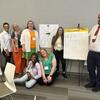
A photo of the team in minnesota

Sustaining Statewide Momentum

The Minnesota Office of Higher Education–joined by their partners throughout the state and The Hope Center–have continued the momentum generated by the release of the Student Basic Needs Working Group’s report, through the College Student Basic Needs Network: Great Lakes (CSBN: GL) and the State Higher Education Executive Officers Association (SHEEO)’s Basic Needs Data Academy. 

Through CSBN: GL, Minnesota hosted its first ever Statewide Basic Needs Convening, bringing together students, state and campus leaders, basic needs practitioners and researchers, and community organizations to share best practices, identify gaps in research and practice, and provide updates about current and upcoming basic needs projects.

Also ongoing is work of the Minnesota Student Parent Alliance–of which The Hope Center is proudly a member–to remove barriers and provide support for the state’s parenting student population by increasing awareness of available resources, strengthening existing programs, and building a more informed and connected network of professionals dedicated to helping parenting students succeed.

Minnesota also deployed the latest rounds of Hunger Free Campus and Student Parent Support Initiative Funding, with staff from The Hope Center joining the pool of grant reviewers in identifying the proposals best-suited to meeting students’ needs.

Every state’s landscape is different—but no state has to build a stronger student-support system alone.


The Hope Center partners with state agencies, higher education systems, institutions, and community leaders to assess student needs, evaluate existing approaches, identify actionable policy and practice opportunities, implement improvements, and build the infrastructure needed for lasting change.


Want to learn more? Explore our statewide work in Kentucky and Michigan, or contact us to discuss how we can support students in your state.